

“Everything is amazing right now, and nobody’s happy.” — Louis C.K.
Welcome to another entry of The Integrated Masculine. Today, we’re diving into the paradox of modern society—why those with less often live more satisfied lives.
I live in one of the wealthiest countries in the world. The average Australian income is now around $100,016 before tax, putting us in the top 10% of earners globally, and in my state alone it is possible to earn double that without a tertiary qualification such as a degree. You’d think this would translate to an easier, happier life—but many Australians argue that the rising cost of living cancels out these financial gains.
If we compare income growth to the cost of living over the past 20 years, the reality might surprise you.
Since 2004, the average Australian income has increased from $45,000 to $100,016—a 122% jump. In contrast, a loaf of bread has gone from $2.50 to $4.40 (a 76% increase), and the average weekly rent in my city has surged from $250 to $660 (a 164% increase).
Despite these rising costs, we are still among the world’s highest earners and rank in the top ten for international travel per capita—hence why you run into Aussies just about everywhere. Yet, despite all this prosperity, we tie for second place globally in depression rates.
In other words, we have it all, and we’re still not happy. Why?
Does wealth equal happiness?
The relationship between wealth and happiness is complicated. While financial security can improve well-being, research suggests that beyond a certain point, more money doesn’t equate to more happiness. This is known as the Easterlin Paradox—the idea that while wealthier individuals within a country may be happier than their poorer counterparts, overall national happiness doesn’t rise as wealth increases.
Why? Because with more wealth comes higher expectations. The more we have, the more we want, creating a constant cycle of striving and dissatisfaction. Wealthier societies also place a heavy emphasis on material success, leading to social comparisons and a sense of inadequacy for those who feel like they don’t measure up.
Wealth and mental health
Countries with high incomes often struggle with mental health. For instance, Australia and New Zealand have some of the highest lifetime anxiety rates—8% and 7.9%, respectively. Meanwhile, lower-income countries like Nigeria and Shenzhen, China, report much lower anxiety rates.
Why do wealthier nations face these challenges?
- Social isolation – Affluent societies tend to prioritise independence, often at the cost of strong community ties.
- Work-related stress – High-pressure careers and long hours lead to burnout and anxiety.
- Mental health stigma – Many still avoid seeking help due to the lingering stigma surrounding mental illness.
For a country with so much, why do we feel so disconnected and overwhelmed?
Sauna philosophy sessions
Most evenings after work, I stop by the sauna at my gym. It’s my reset—focusing on breathwork, calming my nervous system, and letting go of the day’s stress. Sometimes I’m alone, and other times, I share the space with strangers, exchanging stories in the heat.
Two regulars stand out—one from Sierra Leone and the other from Afghanistan, both of whom now call Australia home.
When they talk about life back home, one theme always comes up: stronger community ties, deeper family connections, and a focus on non-materialistic values. Despite economic hardship, they describe a level of happiness and togetherness that feels foreign in a country as wealthy as Australia.
Hearing this firsthand reinforced a realisation—perhaps those with less aren’t actually missing out. Maybe we are.
The hidden costs of wealth
The social media trap
It’s no secret that social media fuels dissatisfaction. We see filtered, curated highlights of other people’s lives and can’t help but compare. The illusion of perfection creates a gap between expectation and reality, leaving many feeling inadequate despite their relative privilege. Meanwhile, in cultures where face-to-face interaction is the norm, happiness is often rooted in real connections, not digital validation. After a month-long social media hiatus at the end of 2024, I can confidently say that stepping away is one of the healthiest things you can do for your mind.
Hustle culture and burnout
In many Western countries, working long hours is a badge of honor. Hustle culture glorifies constant productivity, making rest feel like laziness. Yet, countries with shorter workweeks—like Denmark and the Netherlands—report higher happiness levels. Maybe true success isn’t about doing more but about making space for what actually matters.
In my country, everyone dreams of being their own boss, and there’s nothing wrong with that drive. But the reality? Endless early mornings, late nights, and little time for anything else. I’ve seen firsthand how chasing success at all costs erodes health, relationships, and overall well-being. Balance is key.
The burden of excess
We accumulate things in pursuit of happiness, only to find that clutter adds stress instead of joy. Minimalism is gaining traction as more people realise that more doesn’t always mean better. A life focused on quality over quantity—whether in possessions, relationships, or experiences—tends to feel more meaningful.
Look around your home—how much of your ‘stuff’ truly brings you joy? During a recent declutter, I started using what I call the Poo Test: If an item got poo on it, would I clean it or toss it? If I wouldn’t bother cleaning it, then how much does it really matter?
The paradox of modern dating
Another area where more options haven’t necessarily led to better outcomes? Dating.
As a millennial who has been single for a few months now, I can personally attest to how modern dating often feels overwhelming. Dating apps, social media, and shifting expectations have made the process more complex than ever before. It’s not just me—45% of millennials believe dating is harder for their generation than it was for previous ones, according to a OnePoll/Forbes Health survey.
One major culprit? The paradox of choice. With so many potential partners just a swipe away, commitment becomes daunting. The fear of missing out on someone “better” or “more aligned” keeps many people from fully investing in a relationship. On top of that, the curated nature of online dating creates unrealistic expectations, making it harder to form genuine connections.
In contrast, relationships in many lower-income nations tend to be more stable. Divorce rates are lower, and couples often report stronger long-term commitment. Why?
- Stronger focus on community and family – In many cultures, extended families play a central role in relationships, offering guidance and support to couples navigating challenges.
- Contentment with simplicity – With fewer material distractions, relationships can be more focused on emotional connection rather than external validation.
- Cultural and religious values – Marriage is often viewed as a lifelong commitment, encouraging couples to work through difficulties rather than seeking immediate exits.
It raises an interesting question: Has our pursuit of “more“—more choices, more independence, more personal success—actually made love harder to find and sustain?
Lessons for first-world countries
So what can we learn from cultures that prioritise relationships and simplicity over consumerism?
1. Rethinking success
Many affluent societies define success by wealth and possessions. But in many parts of the world, success is measured by relationships, personal growth, and experiences. When material wealth is no longer the focus, people often feel more content with what they have.
2. Community and social connections
In places like Sierra Leone, social gatherings, music, and dance are deeply embedded in daily life, fostering a sense of belonging. First-world countries can enhance well-being by rebuilding local communities and prioritising human connection over individualism.
3. The power of simplicity
People in less affluent nations often find joy in the simple things—family meals, traditions, and shared experiences. Without the constant pressure to acquire more, they’re free to focus on what truly matters.
4. Experiences over things
Many cultures emphasise life experiences—travel, storytelling, community celebrations—over accumulating wealth. A shift from consumerism to meaningful experiences could dramatically improve our overall happiness in wealthy societies.
5. Reducing consumerism
Endless consumption isn’t just bad for our wallets—it’s bad for our mental health and the planet. Mindful consumption, valuing quality over quantity, and shifting away from excessive materialism can create a more sustainable and fulfilling way of life.
The key to happiness
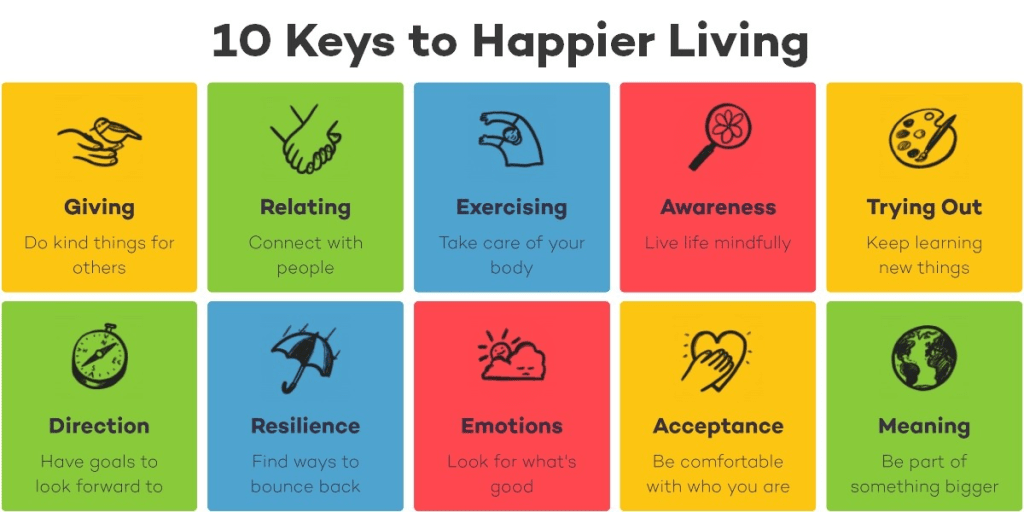
The paradox of modern society is clear: we have more money, more opportunities, and more convenience than ever, yet we feel more stressed, disconnected, and unfulfilled. Meanwhile, cultures with fewer material resources often report higher levels of happiness, deeper social connections, and a greater sense of purpose.
So maybe the key to happiness isn’t having more—it’s needing less.
What if success wasn’t measured by wealth or possessions, but by the strength of our relationships, the depth of our experiences, and the peace we feel within ourselves? What if we stopped chasing more and started appreciating enough?
In the end, a fulfilling life isn’t found in what we accumulate but in what we nurture—the connections we build, the moments we embrace, and the simplicity we allow ourselves to return to.
Less isn’t just more. It might just be everything.
-TIM

 The Integrated Masculine
Leave a comment