
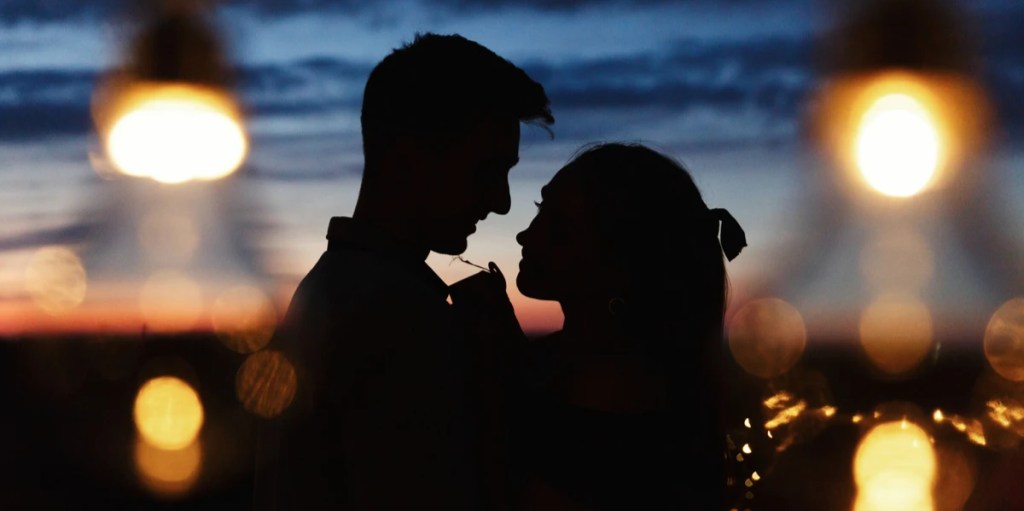
A moment in time
“Tell me, why is a woman like you still single?“
I let the words roll off my tongue smoothly, leaning back just enough to seem relaxed—but not disinterested. My gaze lingers on her, drinking her in, every detail. The way her curls frame her face, soft and wild, one strand rebelliously brushing against her cheek while the other is tucked neatly behind her ear. She’s put in effort tonight—subtle, intentional. Her makeup is barely there, just a whisper of foundation, allowing her freckles to remain visible. Her lips, soft and slightly parted, glisten under the dim restaurant lighting. She looks effortlessly beautiful, the kind of woman who doesn’t need embellishment to captivate a room.
And she captivates me. Not just physically—though that part is undeniable—but something about her energy pulls me in, keeps me leaning just close enough.
She exhales, as if deciding how much truth to give me, then meets my gaze. Unflinching. She tells me she’s been in an affair with a married man for five years. A man thirty years her senior. A man who has never truly been hers. She tells me she’s done with it now, ready to be with someone who can actually be with her. Someone available. Someone she can build a future with.
I listen. No judgment. Just silence stretching between us, thick with unspoken thoughts.
Because I’m not perfect. And I know—better than most—that we don’t always choose who we fall for.
Maybe love isn’t a choice at all. Maybe our souls have already mapped out who we are meant to collide with, no matter how inconvenient, how impossible, how reckless.
And yet, sitting across from her, something settles in me.
I am conscious—deeply conscious—that I am not going to fall in love with this woman.
A familiar voice—one of my closest friends, a psychologist—echoes through my mind, cutting through the charged atmosphere like a blade:
“It would be like walking away from a storm… straight into a hurricane.“
And yet, knowing all this, I still made a choice I can’t quite justify.
Turning the lens inwards
Welcome to another entry of The Integrated Masculine Man. Today, I’m turning the lens inward—taking a hard look at my own love life: the wins, the losses, and the lessons in between. This isn’t an advice piece; it’s more of an exploration, a dive into the patterns I’ve found myself repeating, the questions I keep asking, and the answers that still feel just out of reach. Call it philosophical, call it self-reflective—either way, I’m here to unpack it.
Across all of my relationships, there’s been one common denominator: me.
It’s an obvious truth, but one that’s easy to overlook when it’s more comfortable to blame timing, incompatibility, or circumstances. If I keep ending up in the same cycles, maybe it’s time to stop looking outward for explanations and start looking inward for accountability. That’s what this post is—an introspective dive into my role in the love stories I’ve lived and the ones I hope to create.
Lately, I’ve been wondering: Do people just settle for the safe option when it comes to love? I try not to compare myself to others, but sometimes I can’t help it. What do they have that I don’t? What am I not bringing to my relationships? Or am I simply choosing (or being chosen by) the wrong people? Am I husband material, or am I just not selecting wife material? And then there’s that familiar voice in the back of my mind whispering: Don’t settle for less than you’re worth.
There’s a lot to unpack today. If you’re down for the ride, let’s get into it.
The rules of attraction
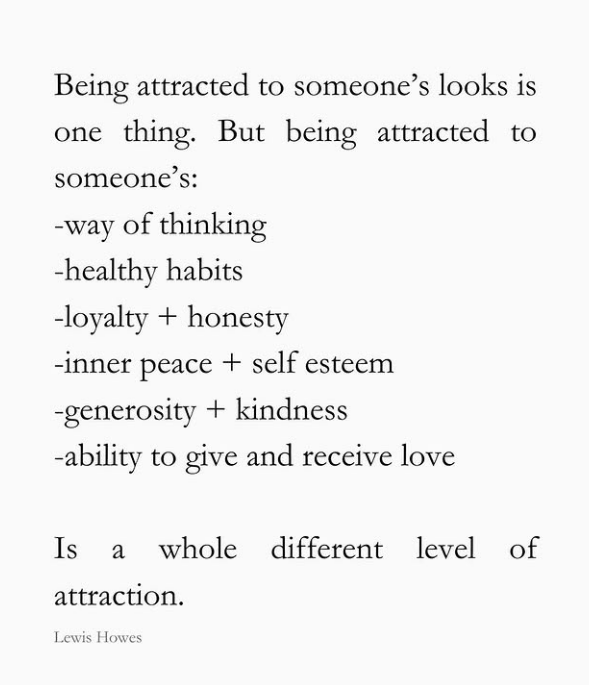
Attraction is a weird and fascinating thing, right? Why are we drawn to some people but not others? A big part of it comes down to psychology and social factors—some obvious, some operating in the background without us even realising it.
For starters, proximity and frequency matter—a lot. The more we see someone, the more familiar and comfortable they feel, which naturally makes them more attractive. Ever had a work crush? We spend more time with our coworkers than with our own families, so even if my work crush keeps giving me terrible cooking advice, those frequent little interactions add up. Exposure breeds attraction.
Then there’s similarity—we’re usually into people who share our interests, values, or backgrounds because it creates an easy connection. For me? That absolute powerhouse of a muscle mummy from the gym, with a big heart and even bigger lats.
Of course, physical attraction grabs attention, but it’s not everything. Someone can actually become more attractive simply because they’re into us—this is called reciprocity, and it’s a huge factor in attraction. I can definitely relate to this when I look back at past relationships.
Social proof also plays a role. Ever noticed how someone seems more attractive when other people are interested in them? Whether it’s the woman whose activewear brand is taking off or the social media influencer getting all the attention—desirability can be contagious.
And then there’s the appeal of mystery or challenge. Sometimes, the fact that we don’t know everything about a person right away keeps us hooked.
Another fun twist? Adrenaline fuels attraction. Doing something exciting together—roller coasters, scary movies, even an intense workout—can trick our brains into feeling a stronger romantic connection.
On an even deeper level, biology and scent come into play. Our bodies subconsciously pick up on cues about genetic compatibility, influencing who we find attractive in ways we can’t fully explain.
For some, spirituality plays a huge role in attraction. The energy we put out into the world through our thoughts and emotions can attract similar energy. Positive thoughts bring positive experiences, while negative thoughts bring negative ones. It’s like tuning into the right frequency to attract the person you want in life.
At the end of the day, attraction is part psychology, part social influence, and part mystery. And maybe that’s why it keeps us all guessing.
It’s me, hi, I’m the problem
A close friend once told me that my type is unavailable women. At first, I brushed it off. But when I really sat with it, I couldn’t deny that there was some truth there. I can think of more than a few romantic entanglements where the person I pursued was, in one way or another, unavailable—whether they were already in a relationship, emotionally distant, physically far away, or just not fully invested (or capable of being so).
Does this mean my attraction is tied to challenge, uncertainty, or something deeper beneath the surface?
I can’t deny that I’m drawn to the thrill of the chase. I think that’s an inherently primal male trait—the pursuit, the conquest, the adrenaline rush of “winning” someone over. But here’s where it gets interesting: sometimes, the chase itself is more exciting than the relationship that follows. I’ve been in situations where, the moment the pursuit ended, so did my attraction. Almost as if I had mistaken the effort of winning someone over for genuine connection.
And lately, I’ve been asking myself an even bigger question: Why do so many of my relationships—recent or past—seem to lack that spark? Not just at the start, but in the moments that should feel deeply fulfilling, where I should feel connected but instead feel distant. Is it because I’ve been seeking intensity in all the wrong places? Am I so accustomed to the highs and lows of uncertainty that when I finally find stability, it feels… dull?
So, am I associating love with effort? If I only feel strong attraction when I have to work for it, does that mean—on some subconscious level—I believe love must be earned rather than freely given?
Or is it that I crave intensity over stability? When I think about the relationships that left the biggest imprint on me, they weren’t the stable, secure ones. They were the ones that kept me on edge, that pulled me into emotional highs and lows, that made me feel alive in their unpredictability. My most passionate flame was with someone who had all the signs and symptoms of having Borderline Personality Disorder, and although being in it was like living a nightmare, I also never felt more alive at the time.
And then there’s the fantasy factor. Maybe I’m idealising the unavailable woman, turning her into something more than she actually is. When someone is just out of reach, I don’t have to deal with the reality of a relationship—only the idea of one. The messy, complicated parts never come into play because they never get the chance to.
So, what does this say about me? And more importantly, is this a pattern I need to break?
I like the chase, but…
A couple of years ago, I had a moment of clarity: I always seem to end up in relationships that come to me. It’s not that I don’t enjoy the chase—I do. But when it comes to actually settling into a relationship, I unconsciously step back and let things happen to me instead of actively choosing them.
So, what does that mean? On the surface, I might be drawn to unavailable people, but on a deeper level, maybe I haven’t fully been ready (or willing) to pursue something long-term in the way that would require.
There’s also the possibility of a fear of rejection lurking beneath it all. Chasing someone unavailable comes with a built-in safety net—if things don’t work out, I can tell myself, “Well, they were never really available anyway.” It keeps me from having to take rejection personally. But when someone actively chooses me, that fear disappears. It makes stepping into the relationship easier because I don’t have to risk putting myself out there in the same way.
If relationships tend to come to me rather than me actively seeking them out, maybe I feel more comfortable in the role of being wanted rather than being the one doing the wanting. Could this tie back to early experiences—where love and attention were given on someone else’s terms, rather than my own? Maybe, for me, it feels more natural to respond to love rather than to seek it out.
Am I sowing the seeds of self-doubt? If I hesitate to fully step into love, am I unconsciously telling myself I’m not ready—or worse, that I’m not worthy? Could this be why I’ve let relationships come to me instead of fully claiming them for myself?
I’m doing my work
At first, I thought that always being the wanted one—rather than the one doing the wanting—was keeping me in the same cycle, drawing in the same type of partners over and over. I’d use the analogy: If you keep using the same bait, you’re going to catch the same fish. So, I set out to break the pattern. This time, I pursued. I went after someone, and I claimed her.
Yes—it didn’t work out. But it was beautifully different from anything I’d known before. It opened doors within me that I didn’t even realise were shut. It showed me my own work—the deeper layers of myself I needed to face—and, more importantly, my worth. I proved to myself that I can overcome whatever fear of rejection might be hiding beneath the surface.
She, too, was transforming—wild and untamed, a wildflower that outgrew the garden I had envisioned us tending together. She needed open fields, free from the edges I once mistook for safety. And maybe that was the lesson: love isn’t about containing something beautiful—it’s about witnessing it bloom, even if it grows beyond your reach.
Now, I lean into this newfound confidence. I find myself stepping into spaces I never imagined I’d be in, meeting people who are seeking something real—something deeper. (Well, some of them are.)
Understanding and communicating my own needs
I’ve learned the hard way that failing to communicate my needs leads to frustration—not just for me, but for my partner as well. In past relationships, at times I’ve been guilty of expecting my partner to just ‘get’ me, but I’ve come to realise that love isn’t about mind-reading. It’s about being brave enough to voice what matters.
Being open about what we need—whether it’s feeling safe, desired, or working toward shared goals—creates deeper connection. It gives our partner the chance to show up for us in ways that actually matter. Plus, it works both ways. When we invite that conversation, we also learn what they need, which makes the relationship stronger and more fulfilling.
And here’s the thing: not all needs align perfectly, and that’s okay. Talking about them helps us figure out if we’re truly compatible or if we’re trying to force something that doesn’t fit. Relationships aren’t just about love; they’re about growth, understanding, and making sure both people feel valued. If we’re not communicating our needs, we’re not really giving the relationship a chance to thrive.
For me at this stage in my life, my biggest needs in partnership are:
- To feel safe – Feeling secure enough to be vulnerable without fear of judgment or abandonment.
- To feel desired – Knowing that your partner truly sees you, wants you, and appreciates you for who you are.
- To work towards common goals – Working toward something together, whether that’s a family, personal development, or life goals.
- To share a deep connection– Feeling heard, understood, and emotionally connected. I struggle in a dynamic where the other person is not capable of emotional depth
- To keep passion & playfulness alive – spur of the moment dates, weekend camping getaways, a stolen kiss in the rain as we frantically rush to get the clothes off the line.
Looking back, I can see how my own evolving understanding of my needs has shaped my relationships. Some felt good in the moment but conflicted with my deeper values. Others seemed perfect on paper but lacked the spark or depth I crave. I’m realising that true compatibility isn’t just about checking the right boxes—it’s about alignment in ways that actually sustain love over time.
The importance of co-regulation in partnership
I’ve been thinking a lot about co-regulation lately—how some relationships have felt soothing and safe, while others have felt like walking on eggshells. I wonder if I’ve always been aware of how much a partner’s emotional state impacts my own. Have I been someone who offers calm in return, or have I sometimes added to the storm?
I’ve started noticing it in small moments. How my breathing slows when I’m next to someone grounded. How tension lingers in the air after an argument, even if no words are spoken. Our nervous systems are wired to sync with the people closest to us, whether we realise it or not. A calm partner can bring steadiness, just as an anxious one can send ripples of unease.
I didn’t fully understand co-regulation—or just how much it affected me—until someone explained its impact on our nervous system. I’d have a stressful day at work, or be weighed down by something difficult, and then I’d come home to my person, hold her, and feel my whole body shift. My breathing would slow, my shoulders would drop, and I could actually feel my parasympathetic nervous system kick in. Once I recognised it, I couldn’t unsee it.
Looking back, I can see how this played out in past relationships. There were times when I felt like I had to manage someone else’s emotions just to keep the peace. Other times, I was the one spiralling, hoping they could bring me back down to steady ground. And when co-regulation is missing entirely—when you’re both stuck in your own storms—it’s exhausting.
I’m learning that co-regulation isn’t about fixing each other. It’s about presence. It’s about knowing that when the world feels overwhelming, you have someone who won’t add to the chaos. And just as importantly, being that for someone else.
Interdependency vs Independency
I’ve always prided myself on being independent. For years, I handled life on my own—made my own decisions, built my own routines, answered only to myself. But when I step into a relationship, I realise how much of that mindset still lingers. I catch myself resisting small shifts, hesitating before asking for help, even when I know I don’t have to do everything alone anymore. So where’s the line? At what point does independence stop being a strength and start keeping me at arm’s length from real connection?
I’ve always valued my independence, but I’ve also felt how it can turn into distance if I’m not careful. The key is to strike a balance where you can enjoy the benefits of both independence and interdependence.
After spending a long time single, adapting to interdependency can be a bit of a challenge. When you’re used to doing everything on your own, it can feel strange to start relying on someone else. You might struggle with letting go of control or fear losing your independence. It’s completely normal to feel this way, and it takes time to adjust. When I start to enter the dance with a new partner, I often find it hard to justify breaking my own routines, often telling myself things like ‘I don’t have time do X or Y’, when in reality, I can always make time, I just have to shift the mindset of being independent.
When I’m in a relationship and my partner gives me feedback about something I might need to change, I don’t see it as losing my individuality. Instead, I view it as a chance to grow (within reason, of course). For example, there was a time when a partner suggested that my son shouldn’t always be my top priority. That feedback didn’t sit well with me. While I always strive to put my partner first, being a parent is my most important role. Balancing these responsibilities is crucial, and any relationship I enter into needs to respect and support that fundamental part of my life.
On the other hand, there are times when feedback is welcome and appreciated. For instance, if my partner critiques what I’m wearing, I see that as helpful. I want to look good when we’re out and about, and I want my partner to feel proud and happy when they look back at photos. Knowing that they care about how I present myself makes me feel valued and supported.
I’ve been learning that interdependence isn’t something you just step into overnight. It’s a slow unravelling of old habits, a willingness to let someone in little by little. I remind myself that asking for input doesn’t mean losing control, and sharing the weight of life doesn’t mean I’m incapable of carrying it alone. But it’s a process. One I’m still figuring out.

By this point you’re probably thinking “This guy has more red flags than a Spanish running of the bulls!”
I can feel it happening again—that shift in self-awareness where I know I’m emotionally available, open to giving and receiving love. It’s a familiar space, but this time, it feels different. This time, I’m stepping into it with more intention, more clarity about what I actually want.
For a long time, I lived by the mindset of “if it’s meant to be, it will be.” It was comforting in a way—like I could just sit back and let fate take the wheel. But when I really look at it, that belief kept me in a passive role, waiting to be chosen rather than actively choosing. It made me focus on being wanted rather than doing the wanting. And if I’m honest, it probably led me to overlook some glaring red flags in the past—letting myself be swept up in the excitement of being pursued rather than asking, Is this actually right for me?
That’s not how I want to approach love anymore. My new mindset is about growth, about taking an active role in shaping the kind of partnership I want. If I want to build something meaningful, I can’t just wait for it to fall into my lap—I have to go after it. The most successful people don’t sit around waiting for opportunities; they create them.
And that’s exactly what I intend to do.
I keep thinking about that idea of three seconds of courage—the small but powerful moment where you push past fear and just go for it. I’ve said it like a mantra, but now, it’s time to turn it into action. Because the kind of love I want isn’t something I’m going to stumble into by accident. It’s something I have to be brave enough to create.
Where do I go from here?
As I sit with all these thoughts, I realise just how much I’ve learned in this space between past relationships and where I am now. It’s not about having it all figured out—because, honestly, I’m not sure we ever fully do. But it’s about being open to growth, accepting the messy parts of myself, and stepping into the unknown with the courage to be vulnerable.
This journey is one of continuous growth, and I’m on it until the day I’m pushing daisies.
As helpful as it is to sit, reflect, and look at all my imperfections under a light, it’s all for nothing if I don’t act with integrity and aim to be better.
Reflection without action is just a circle that leads nowhere.
So, I’m done waiting for love to simply happen. I’m done letting myself sit back in the shadows, hoping for a perfect scenario to unfold. It’s time to lean in, take the wheel, and actively create the partnership I’ve always envisioned.
What I’ve come to understand is that I don’t have to have all the answers or be “perfect” to be deserving of love. I just have to keep showing up—honestly, openly, and ready to take the risks required to build something real.
Thus brings us to the end of another chapter of The Integrated Masculine Man. Thank you for being a part of my journey, I hope you enjoyed reading this one!
-TIMM

 The Integrated Masculine
Leave a reply to The Introverted Bookworm Cancel reply